







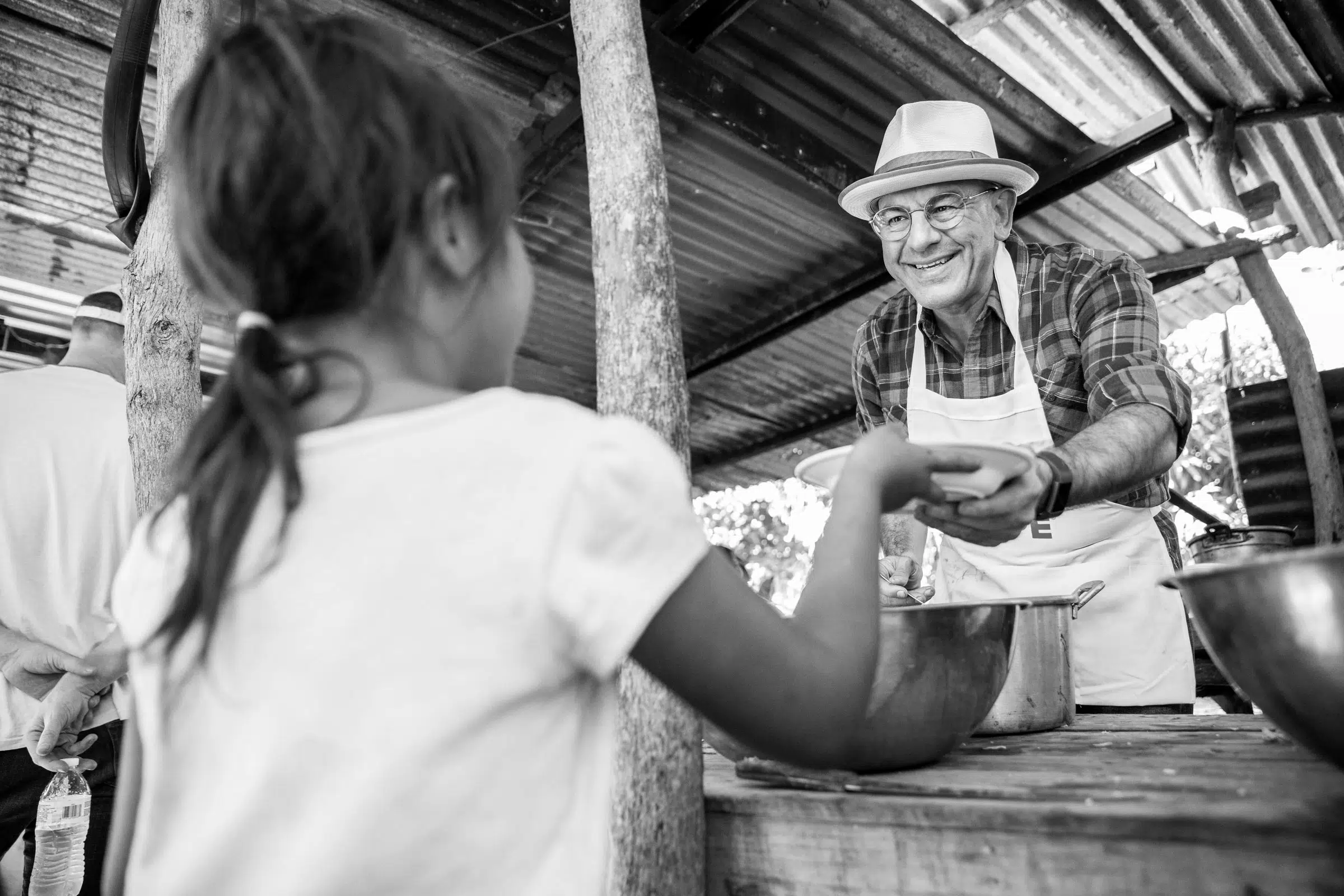
Chef Simon Majumdar is an internationally recognized food critic, food historian, and author. He is also passionate about curbing hunger. Convoy of Hope, recently interviewed Simon for the Hope Quarterly.
Convoy: You were training to be an Anglican priest at one point. Talk about that journey.
Simon: Life is full of different journeys. From the time I was about 10, I was convinced I would become an Anglican priest. Right up through my university years at King’s College London I pursued that goal. I did quite well in my theological studies, but was not selected by the admissions process when I completed the program. A priest told me, “This is not your journey.” And that really threw me. If something you’ve believed all of your life is suddenly taken away from you at 21, it leaves you wondering what you’re going to do.
Convoy: How did your life change between that disappointment and where you find yourself today?
Simon: I wasn’t sure what to do at first. On the recommendation of a friend, I got into book sales. I worked for Penguin Books in the mid-’80s and then was an executive for another publishing company with about 50 employees. In the early 2000s, that company began to fail. While that was happening, my mother died of leukemia. I found myself on the balcony of my apartment building ready to jump off.
A Lebanese family in the apartment below me was cooking, and the smells of that incredible food came wafting up. I suddenly became more hungry than suicidal, and I went back inside and cooked a meal. I’ve cooked that dish since then for many people and, due to those circumstances, call it “Life-Saving Dhal,” a wonderful lentil dish. I determined that day to pursue a list of goals I had hanging in the kitchen, starting with “Go everywhere, eat everything.”
Convoy: In essence, food saved your life.
Simon: Food literally saved my life that day. And what I’ve realized is, food is not just about eating. It’s about the people. Our connections over a shared meal are a form of ministry. As I’ve cooked for people and told them stories, I’ve tried to communicate that there’s a strength within us that will get us through the most difficult of times.
Convoy: You’re passionate about food and the communion it brings among people. Talk about hunger.
Simon: I can ask my wife, Sybil, “What would you like to eat?” and then I’ll prepare it for her. But, when I travel and speak with people in many communities, they do not live with the certainty of their next meal.
It might come down to whether they can buy their food that day and still afford the medication they need, or their rent, or to adequately provide for their family. And one of the things I like about how Convoy deals with this is, it’s not just about being kind, but it’s about being kind with a strategy. And I can be part of that strategy by making people more conscious of what they eat, and of how many people there are who can’t take for granted what we enjoy. Hunger offends me. I’m determined to use what gifts I’ve been given to fight against it.
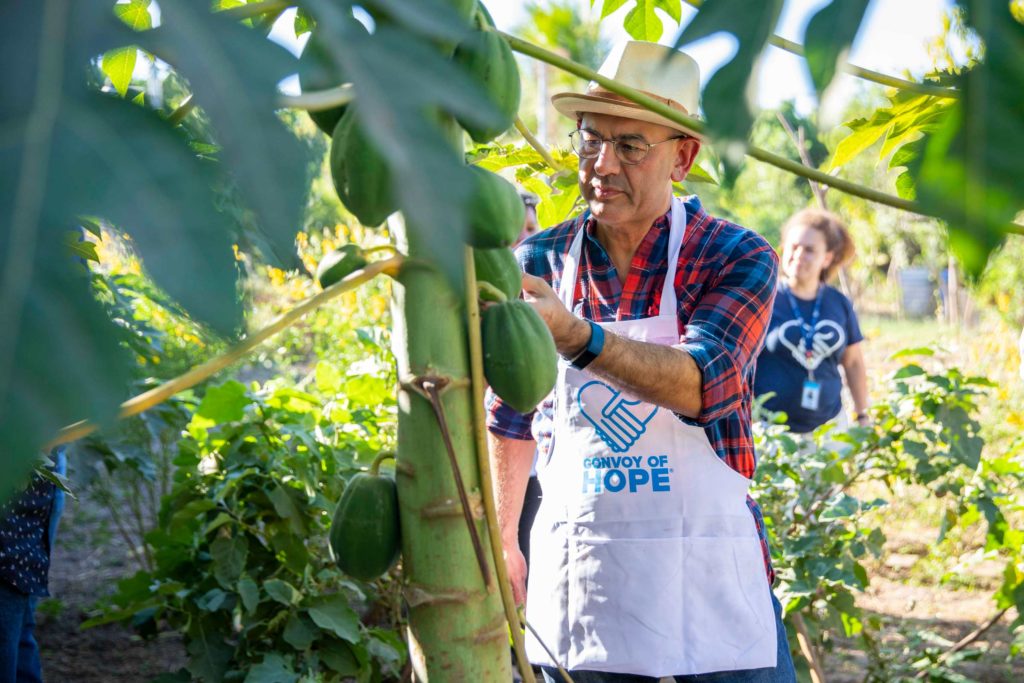
Convoy: You’ve traveled to Africa and Central America to see Convoy of Hope in action. What did you see that captured your heart?
Simon: When we went to a school in Tanzania, seeing the children receive an amazing meal, seeing how that changes them, seeing that nourishment and strength coming into young bodies, and then just seeing how excited they were to be there. All from a wonderful meal. In El Salvador, the Women’s Empowerment program just filled Sybil and me with so much joy.
Seeing ladies who had created a cooking business with Convoy’s help and watching their customers come and buy their food. I say to anyone who wants to become involved with Convoy, “A trip with a Convoy of Hope team will literally change your life.” I am looking forward to my next opportunity to get on a plane and take my next trip with Convoy. It’s not just seeing the work, it’s the impact on our own lives when we come home.